This is one of the most common questions owners search for, and there’s no reason to feel embarrassed about asking it. If you’re wondering what happens if you stop paying your timeshare, you’re not alone. In fact, what happens if you stop paying your timeshare is a frequent concern among owners. Whether the fees have become unmanageable or the timeshare simply doesn’t fit anymore, it’s a reasonable thing to want a straight answer to before deciding what to do next.
The Fee Doesn’t Disappear Just Because You Stop Paying
Your contract ties the maintenance fee to the agreement itself, not to whether you use the property in a given year. Missing a payment doesn’t cancel the agreement or end the obligation. It simply puts the account into default, and the contract’s collection process takes over from there. Ultimately, what happens if you stop paying your timeshare is that these default provisions and collections processes automatically begin.
What Actually Happens, Step by Step
First, a late notice arrives, usually with an added late fee. If the account stays unpaid, most companies escalate to a collections process, either in-house or through a third-party agency. At that point, the collection agency can report missed payments to the credit bureaus, which is where an unresolved timeshare balance starts to affect more than just the resort relationship.
Depending on the contract and the state the property sits in, continued non-payment can eventually lead to further action against the timeshare interest itself, up to and including foreclosure of that interest. The details vary by contract and location, but the pattern is consistent: stopping payment on your own, without a plan, shifts the obligation into a collections process rather than ending it. So, what happens if you stop paying your timeshare is that you may face a collections process and potential foreclosure.
Why Walking Away Isn’t the Same as a Full Cancellation
There’s a real difference between simply not paying and legally ending the contract. Informally stopping payment leaves the obligation active and puts your credit at risk while the collections process runs its course. A full cancellation, done correctly, terminates the agreement itself, so there’s no lingering balance for a collector to chase.
A Structured Path Protects What Matters
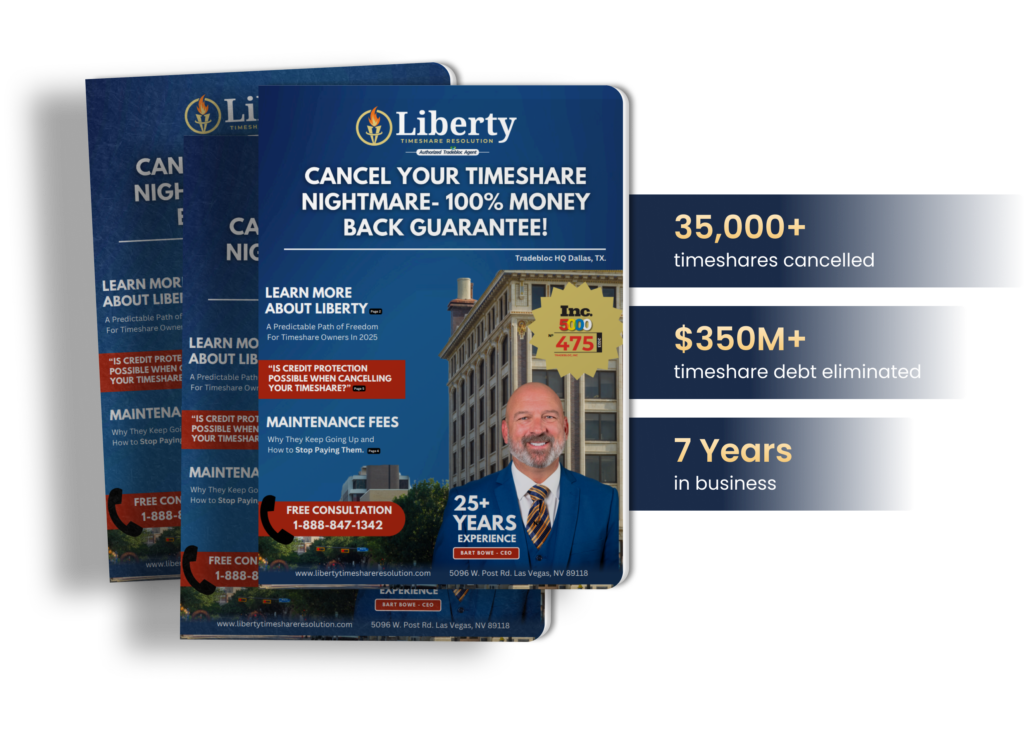
Liberty has helped more than 30,000 owners fully cancel timeshare agreements, eliminating more than $350 million in obligations since 2018, backed by an 18-month, 100% money-back guarantee. We design the process specifically so you can stop paying immediately, without destroying your credit, because the cancellation itself, not a missed payment, ends the obligation. Clearly, what happens if you stop paying your timeshare depends on whether you pursue a proper cancellation.
If You’re Already Weighing This Decision
If you’ve been searching for what actually happens before you stop paying, that instinct to find out first is the right one. A free consultation can lay out exactly where you stand and what a full cancellation would look like for your specific contract.
Want the full picture before you decide anything? Click here for our free guide on what actually happens when you stop paying, and how a full cancellation works.